
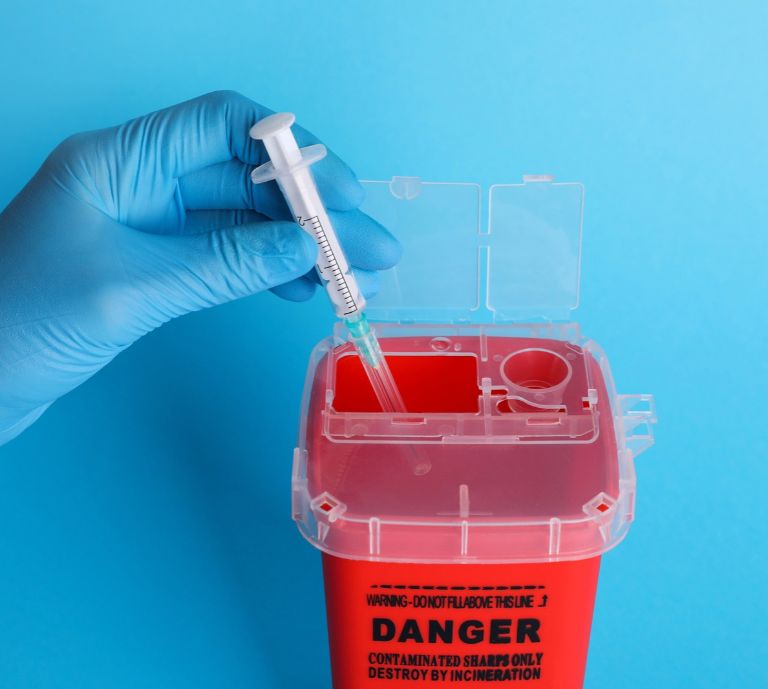
If your facility uses sharps containers, you already know the basics of sharps container disposal: a licensed provider picks up the full containers and replaces them with clean ones. But what actually happens after that truck pulls away? The answer matters more than most people realize, and the chain of custody from your door to final treatment is something every healthcare facility should understand.
From Your Facility to the Transport Vehicle
The moment a full sharps container leaves your exam room, lab, or clinical area, it becomes regulated medical waste subject to federal, state, and local handling requirements. In Texas, that means the waste must be managed by an approved, compliant transporter from the point of pickup onward. When we collect containers from facilities in Houston, Sugar Land, Katy, Spring, and surrounding areas, every container is secured and documented before it ever leaves your property. Nothing moves without the proper paperwork in place.
That documentation is not just a formality. It creates a legal record showing exactly where the waste originated, who handled it, when it moved, and where it ended up. For your facility, that record is your protection during an inspection or audit.
Transportation: What Compliance Actually Looks Like
Regulated medical waste transport has to meet specific requirements at every level of government. Vehicles must be properly equipped, drivers must follow hazardous materials protocols, and waste must be secured against spills or access during transit. Facilities in Baytown, TX and throughout the greater Houston region are served under the same compliance standards that apply statewide, and those standards exist for good reason.
We operate with 100% compliant recovery, transportation, treatment, and disposal of regulated medical waste. That means every step of the process meets local, state, and federal requirements, not just some of them. There are no shortcuts taken at the convenience of the schedule.
Treatment and Final Disposal
Once sharps containers reach a licensed treatment facility, the waste is processed using approved methods. For sharps, this typically involves high-heat treatment or incineration that renders the material non-infectious and safe for final disposal. The treated waste is then disposed of in permitted facilities according to applicable regulations.
This is where a lot of facilities simply trust that it happens correctly. And it should. But the difference between a compliant provider and a cut-rate one often shows up right here, at the treatment and disposal stage. Working with an approved medical biohazardous waste disposal service means the treatment facility at the end of that chain is also held to the same standard, not just the pickup end.
The Certificate of Destruction and Why You Need It
After disposal is complete, your facility should receive documentation confirming it. We provide a Certificate of Destruction for every service, giving you a physical record that your waste was handled, treated, and disposed of in full compliance. That certificate is something regulators can ask for, and having it on file keeps your facility in a defensible position.
Healthcare offices, surgical centers, labs, veterinary practices, and assisted living facilities throughout the Houston area and in communities like Spring, TX and Sugar Land, TX face real consequences for improper waste handling. A Certificate of Destruction is simply good practice, and it gives staff and administrators confidence that the process was completed correctly.
Why the Chain of Custody Is Your Responsibility Too
OSHA and Texas regulations place responsibility for proper disposal on the waste generator, not just the hauler. That means your facility is accountable for choosing a compliant service and maintaining records that demonstrate proper handling. This is one reason we also offer OSHA training for healthcare facilities, so your team understands not just the rules around disposal, but how to document and verify compliance on your end.
Choosing a locally owned and operated provider near the Texas Medical Center area means you are working with a team that knows this regulatory environment well. We work with no contracts and no hidden fees, and we schedule service on whatever frequency fits your practice, daily, weekly, monthly, or on request.
Questions About Your Sharps Disposal Process?
If you are unsure whether your current sharps container disposal process is fully documented and compliant, or if you want to understand more about what happens after pickup, we are happy to walk you through it. Give us a call or drop us an email and we will answer your questions directly, no pressure, no obligation.