
Red Bag Waste Disposal Services
Red bag medical waste management and regulatory requirements
Whether you operate a solo dental practice, a nursing home, or manage environmental services for a hospital, your facility must comply with strict state and federal regulations for infectious waste (red bag) disposal. Failing to meet these standards compromises safety by risking the cross-contamination of patients, staff, and visitors and can subject your facility to millions of dollars in regulatory fines.
For nearly a decade, Nucore Medical Waste Services has provided safe, efficient, and reliable red bag waste collection and infectious waste disposal services across Houston, Katy, The Woodlands, Sugar Land, Baytown, and Spring, TX.
How healthcare facilities can maintain safe disposal practices:
As an authorized waste disposal facility, we have a comprehensive understanding of the regulations set by the Texas Commission on Environmental Quality (TCEQ), the Occupational Safety and Health Administration (OSHA), and the Environmental Protection Agency (EPA). Our primary goal is to ensure that your operations remain fully compliant with all applicable regulations.
Don’t get stuck! Avoid hefty fines for improper waste disposal. Contact Nucore Medical Waste Services today to schedule a red bag pickup at your facility.
Nucore Medical Waste Services provides professional red-bag waste disposal for healthcare facilities throughout Greater Houston. However, the first step in ensuring your healthcare facility remains fully compliant is to understand which materials qualify as red bag waste and the proper workflows for collection, transportation, and disposal required by state and federal laws.
Also known as Regulated Medical Waste (RMW) or biohazardous waste, red bag waste is strictly defined under OSHA’s Bloodborne Pathogens Standard (29 CFR 1910.1030) and the TCEQ. It includes any non-sharp disposable item that is visibly soaked, saturated, or dripping with human blood or other potentially infectious materials (OPIM).
Saturated medical waste can only be deposited into approved, tear-resistant red bags that contain the universal biohazard symbol (☣). Bags should be no more than three-quarters full and must be securely sealed.
A red biohazard bag must be transported in accordance with state and federal laws. Nucore transport vehicles, in compliance with the Department of Transportation (DOT) and TCEQ Title 30 regulations, are visibly marked with international biohazard placards. Our drivers are fully trained in safe transport handling and spill response.
When infectious (red bag) waste arrives at our state-licensed facility, it goes through a certified decontamination process. The process neutralizes the infectious material, allowing it to be safely disposed of as solid waste.
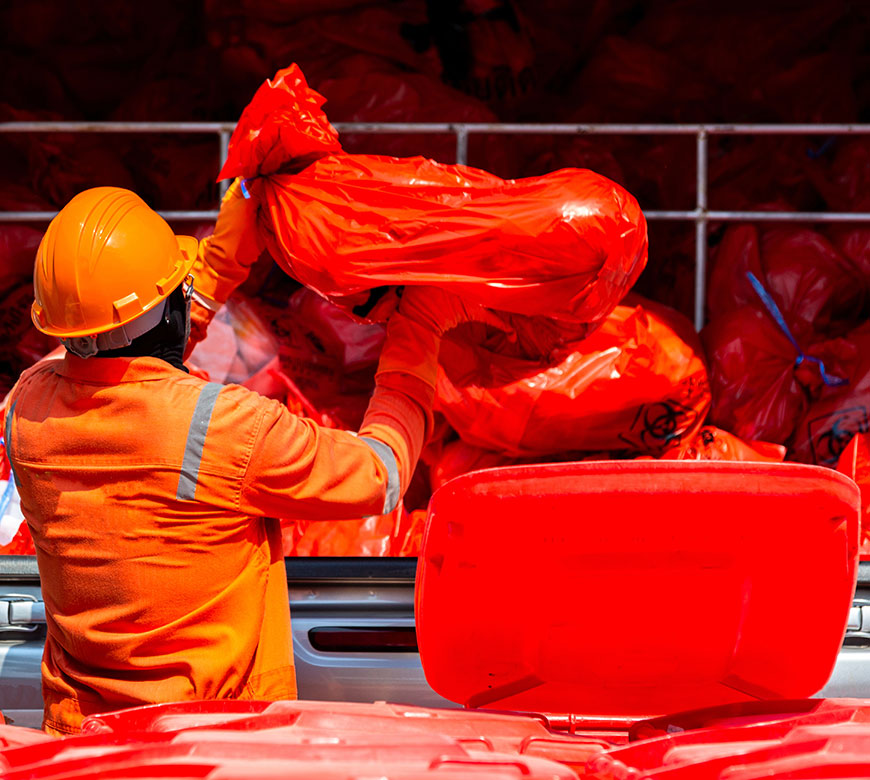
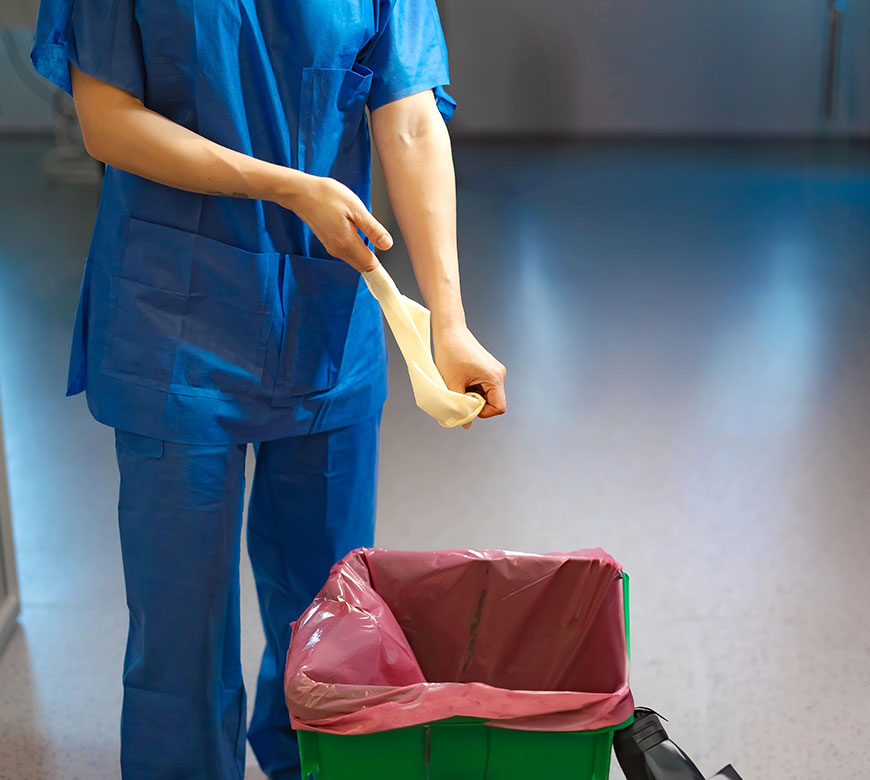
To avoid heavy fines during an unannounced visit by a state or federal inspector, it is essential to understand the requirements for infectious waste disposal and implement proper waste-stream segregation. Remember, it isn’t the quantity of waste that triggers an infraction, but the mere fact that it exists. If it exists, your facility is legally responsible for its proper tracking and disposal. That’s because even a tiny amount of blood or bodily fluid poses severe cross-contamination risks to your patients, staff, and the community.
Proper segregation of your waste streams prevents cross-contamination of your clinical environment, which could expose your facility to severe state and federal compliance penalties.
For nearly a decade, Nucore has delivered safe, reliable, and fully compliant biohazard waste removal to healthcare providers across Southeast Texas. We make it easy for local facilities to maintain safe environments for their patients, staff, and visitors:

When infectious waste is improperly handled, it exposes healthcare workers and environmental services (EVS) staff to dangerous pathogenic microorganisms. With consistent pickups, deep regulatory expertise, highly responsive support teams, and dependable service coverage, healthcare providers across the Houston – The Woodlands – Sugar Land metropolitan area choose Nucore Medical Waste Services for compliant red bag waste disposal.
All infectious (red bag) waste in Texas must be properly disposed of in strict accordance with state and federal regulations. Here are answers to some of the most frequently asked questions about accepted materials, pickup schedules, compliance requirements, and service availability:
Red bags are for regulated medical waste (RMW) and infectious materials only. They include items that are heavily saturated with human blood or other potentially infectious materials (OPIM), such as used bandages, gauze, surgical dressings, contaminated personal protective equipment (PPE), and clinical laboratory cultures.
No. Regular trash, chemicals, and expired medications must never be placed in a red bag.
Facilities must comply with rules governing the recovery, transportation, treatment, and disposal of these materials, enforced by OSHA, the EPA, and the TCEQ. Requirements include proper point-of-generation segregation and the use of approved biohazard-labeled bags in durable containers. You must also document and maintain a cradle-to-grave chain of custody of all biohazard waste materials.
Nucore tracks the entire chain of custody, from collection to disposal. Once your red bag waste is gathered and safely treated at our state-licensed facility, we issue a Certificate of Destruction for your permanent records. This provides your administration with a secure, “cradle-to-grave” paper trail proving full legal compliance.
Our collection schedules are completely flexible and tailored to your facility’s waste collection and disposal needs. For example, we can schedule multiple daily pickups for busy regional hospitals or, upon request, for small practices with occasional red bag waste.
We collect infectious materials for transport in our safe, secure vehicles, specially equipped and licensed for biohazard materials. Upon arrival at Nucore’s state-licensed disposal facility, the biohazard materials are neutralized by steam sterilization, rendering them entirely non-infectious and safe for final disposal.